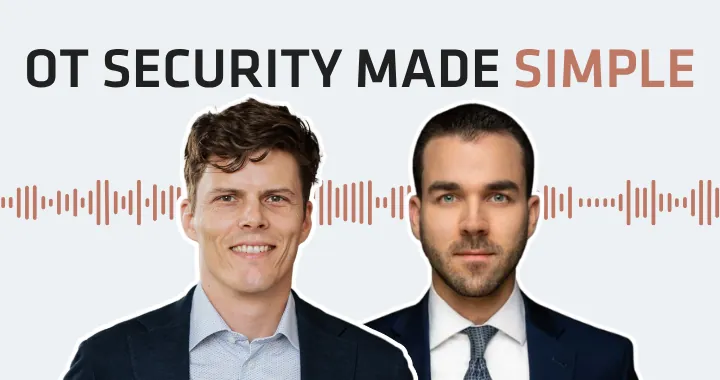
Klaus Mochalski and criminal profiler Dr. Mark T. Hofmann discuss the motivations of cybercriminals. Learn why the “hoodie” stereotype is outdated, how generative AI drastically lowers the barrier to entry for attacks, and why the human firewall is more important than ever in the age of deepfakes.
Sound Bites Dr. Mark T. Hoffmann: “No one can describe how cybercrime works better than the perpetrators themselves. And if you want to talk to the ‘good guys,’ all you have to do is go on the dark web, because only the ‘bad guys’ are in prison. ”
Dr. Mark T. Hoffmann: “Cybercrime is the third-largest economy in the world. [...] When you think of hackers, you should think more of a Silicon Valley company or a mid-sized firm with 130 employees. That’s a more realistic picture than the 15-year-old teenager acting alone. ”
Dr. Mark T. Hoffmann: “[...] among black hat attackers, 76.3% cited ‘challenge’ as their motive. In my experience, this is also the most significant motive in the cyber underworld. They do it because they can. They do it because they love the thrill, because they love the challenge, and the more challenges they see, the more exciting the whole thing becomes. ”
Dr. Mark T. Hoffmann: “Cybercriminals have alternatives; they could also make a lot of money legally, but with Choice, they choose the dark side.”
Dr. Mark T. Hoffmann: “They’ve realized you can’t fly too close to the sun, like Icarus. Because once you start hacking water utilities, pipelines, and the Pentagon, you’ll be on the FBI’s most-wanted list and in federal prison faster than you can count to three.”
Dr. Mark T. Hoffmann: “In the future, with generative AI and especially with the cloud and Co., all I’ll need to start committing cybercrime is a laptop and a motive. And we shouldn’t underestimate that, because it means the hacker profile will change. All I’ll need is a laptop and a motive. That means the intellectual barrier to entry drops to a minimum.”
Dr. Mark T. Hoffmann: “In companies, a passphrase isn’t secure enough, but I recommend hanging up and calling back. [...] Unfortunately, the number of cyberattacks that could have been prevented using this principle is also growing every day.”
Chapters 00:00 Welcome and Introduction
03:22 Cybercrime as the Third-Largest Economy
07:18 Ethics and Limits in Attacks on Critical Infrastructure
09:04 Ransomware and State Actors
12:40 Sabotage and Cyberterrorism
16:06 Prevention and Forensic Analysis
20:11 Improving Efficiency with AI Tools
22:14 Protective Measures and the Human Firewall
25:10 Deepfakes and Social Engineering
28:59 Future Threats and Security Measures
30:06 Conclusion and Acknowledgments
Keywords Cybercrime, OT security, the dark web, offender profiles, AI, deepfakes, critical infrastructure, cyberattacks, ransomware